After the Crash partly succeeds

Standard

A plane crashes in France.  All passengers are killed except an unidentifiable baby girl.  The premise of After the Crash, a newly translated thriller by Michel Bussi, sounds unbelievable and silly.  But the more you read, the more plausible it becomes.

A custody battle ensues between possible grandparents from the rich de Carville family and possible grandparents from the poor Vitral family, each with plausible claims that the baby is theirs. Custody of Lylie, as she comes to be called, is awarded to the Vitrals, who are also taking care of their grandson, Marc. After 18 years, Marc has developed an attraction for Lylie, who does not look or act like the rest of the Vitral family.

After the custody battle, the de Carvilles hire a private eye, Credule Grand-Duc, to keep investigating the case. He uncovers many clues but mostly dead ends in a maddening 18-year search.  Throughout the novel, Marc is reading passages from Grand-Duc’s journal about the case.  That is primarily how we learn about validity of the competing families’ claims.

The story is mysterious and suspenseful. Bussi intentionally frustrates the reader by withholding crucial information.  For example, after Grand-Duc writes that he arranged for a secret DNA test, he doesn’t record in his journal what the results were.  Instead he simply writes about how shocked and dismayed he was by the results.  Much of the book is like that—one tease after another.  The teasing starts out fun but becomes tedious and annoying.

Bussi wants the readers to root for Marc and Lylie’s relationship. Several of the main characters hope that Marc and Lylie aren’t actually brother and sister so that they’re love affair will be acceptable.  However, the whole concept grossed me out.  Even if they are not biological siblings, they still grew up together.  Their romance didn’t work for me.

Some of the prose is stilted and the word choice is uneven, which I assume is because of the translation.

If you want to read a clever mystery that doesn’t start with a murder, this book will fit the bill.  There’s enough intrigue, clues, and red herrings to motivate you to keep reading.  But overall, the purposeful withholding of information got old. I wanted the book to end.  For that and the incest/yuck factor I’d give this book a two-star rating.
Big data highlights big delays in veteran care

Standard

The Iraq and Afghanistan Veterans of America (IAVA) are capitalizing on the power of social media, analytics tools, and data visualization technology.  They’re using these capabilities not just to recruit and serve members, but to monitor and report on the quality of veteran care across the country.  These projects help public officials shift resources to underserved veterans.  The website 1to1 Media recently interviewed IAVA’s CEO about these initiatives:

Iraq and Afghanistan Veterans of America Gives Data a Seat at the Table

The nonprofit organization uses data visualization and social media tools to uncover insights about female veterans and more.

By Judith Aquino | Published 01/20/2016 in 1to1 Media

For-profit businesses aren’t the only organizations that are leveraging data analytics and online tools—nonprofit organizations like Iraq and Afghanistan Veterans of America (IAVA) are also investing in better member experiences.

As the largest organization for veterans of the Iraq and Afghanistan wars, IAVA helps veterans successfully transition back to civilian life. 1to1 Media spoke with IAVA Founder and CEO Paul Rieckhoff about the organization’s use of data collection tools and social media.

1to1 Media: In what ways did your organization need help to better reach and engage veterans?

Paul Rieckhoff: Our veterans’ population is young—the average age is in the late 20’s. They’re also digital natives, but extremely geographically and ethnically diverse. One of our biggest challenges is trying to connect 3 million people who are spread out across the world. Technology provides their connection to home.

We began working with Salesforce six years ago and they’ve empowered us to do a lot from a shoestring budget, from getting the veterans connected to their families, building an online community, and collecting information to better understand a veteran’s needs. On Veterans Day, for example, we organized 144 events around the country in one week. Salesforce allowed us to do everything from marketing to check-ins to social media integration to getting people in touch with a therapist.

Do you have an example of an insight about your members that you discovered and were able to implement to improve your service?

Our generation of veterans is different in a lot of ways but one aspect in particular is that 20 percent of our members are women. And they’ve had unique challenges accessing healthcare and getting child care support. We were able to drill down and find out what their experiences were like in the Veteran Affairs system.

What we found out was a female veteran’s experience was much worse than their male counterparts in getting support. We were also able to share that data with Congress. We testified before Congress at least 18 times [in 2015]. Every time we go before Congress, we use this data to share what’s happening on the ground for women veterans.

In some ways we have better data than the Secretary of Veteran Affairs. We’re able to explain to him where the gaps are and what women veterans are looking for from the VA. Many of our women members are also frustrated in getting recognition as veterans. So it’s a cultural transformation that has led all the way to women registering as rangers and the military allowing women into combat roles. We’re part of that movement in making the case that women can do anything that men can.

How do you gather data?

We have systems in place that allow us to connect with the veterans on their cellphones or via social media. For instance, if a woman is having challenges getting healthcare, and she reaches out to us on Twitter, one of our case managers can get in touch by phone, email, or social media within 24 hours. That gets entered into a case that goes into our systems.

We get other data on a regular basis from web traffic, phone calls, and donations. A lot of it is user generated…

New Israeli drone provides air rescue

Standard

air-mule

Unmanned aerial vehicles can play a role in medical evacuation of wounded troops and search-and-rescue missions.  This would be especially useful in areas that helicopters can’t reach.  From Daily Dot Tech with a tip of the hat to Barry Roskin Blake:

This ambulance drone can carry two people out of dangerous situations
By AJ Dellinger
Jan 22, 2016

When it comes to military conflicts, drones are best known for killing. But the AirMule is built for saving lives, and it recently completed its first successful flight.

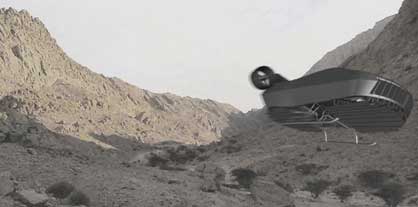
The autonomous vehicle, built by the Israeli company Tactical Robotics, serves as an airborne ambulance. The unmanned craft, which can take off and land vertically, can travel to terrain unsafe for human rescue personnel—like a battlefield.

The AirMule is designed to carry two people at a time and can lift nearly 1,000 pounds and travel over 30 miles. A single engine powers the drone, and the rotors are entirely internal. Its design presents opportunities for emergency rescue craft and cargo-carrying vehicles.

The AirMule test run occurred at a facility in Megiddo, Israel, after the Israeli Civil Aviation Authority cleared the company for unmanned flight. Future tests, including demonstrations of its cargo-carrying capacity and beyond-line-of-sight flights, are planned for later in 2016.

Thanks to its internal rotors, the AirMule is capable of traversing areas unreachable by emergency vehicles and helicopters. Because of this design, the drone can get closer to structures and navigate tight confines…

City denies disabled vet’s plan for iPad-controlled smart home

Standard

Taylor Morris, a Navy veteran who was injured defusing a bomb in Afghanistan, and his wife want to build a “smart home” in Cedar Falls, Iowa, that he can operate with a mobile device.  The property they want to buy is zoned for agriculture.  The Cedar Falls city council has denied the Morrisses’ request to have it rezoned residential.

It’s hard to judge a rezoning application without seeing the actual plans.  However, the reasons for the denial (as reported by the Waterloo-Cedar Falls Courier) are flimsy.  The main reason cited is that approval would have “set a bad precedent.”  This is specious because there probably isn’t a backlog of rezoning applications from quadriplegic war veterans in the Cedar Falls zoning department.  If a similar application came through by somebody without a disability, the city could justify a different decision based on the difference circumstances of the applicants.

The second stated reason for denial is that the property is too difficult to access for providing public services.  That is probably a legitimate concern assuming the site is tricky for trash pick-up, police, fire service, etc.  However, the city has in their long-term plans an objective to rezone the area to residential anyway.  Wouldn’t approval help Cedar Falls make progress toward their own plan?

I really hope that city officials will redouble their efforts to work with the veteran and his wife.  Mr. Morris is trying to take advantage of technological innovations on the market to live a more comfortable life with his family.  It’s the kind of residential development that most communities would want to promote.

Gene edits make blind rats see

Standard

albino rat

Scientists have improved the eyesight of rats with retinitis pigmentosa.  The CRISPR/Cas9 gene editing technique has been credited with this breakthrough.  The finding could help improve the vision of humans with the same condition.  From Science Alert earlier this month:

Rats born with an inherited condition that leads to blindness have had their eyesight improved, thanks to a new gene editing technique.

The condition, called retinitis pigmentosa, is also a common cause of vision loss in humans and right now, there is no cure. This is the first time that scientists have shown that they can effectively ‘erase’ some of its damage from the genome – in rats at least – and that’s a pretty big deal.

The gene editing technique is known as CRISPR/Cas9, and if you haven’t heard of it already, you soon will. It’s a set of two enzymes traditionally used by bacteria that pretty much work like a cut/copy function for genomes. Because of this, it has the potential to relatively quickly and easily remove harmful genes from human DNA, as well as add new and improved features.

As you can imagine, CRISPR/Cas9 is as controversial as it is exciting, with the very real potential that it could lead to things like designer babies.

But if a current bid is approved, within weeks, we could see the first human embryos have their genes edited using the technique in the UK, so it’s definitely not going away any time soon. Chinese scientists have already admitted using the technique on human embryos.

The new demonstration by scientists at the Cedars-Sinai Medical Centre that CRISPR/Cas9 can improve vision in rodents destined to go blind adds yet another reason for why the technique is going to be highly sought after in future.

“This is the first time CRISPR/Cas9 gene editing has been used to prevent vision loss in a living animal,” said one of the team, Clive Svendsen. “It is a truly remarkable result and paves the way for more exciting studies and translation to the clinic in the future.”

In order to improve the rats’ vision, Svendsen and his colleagues designed a CRISPR/Cas9 system that would remove a mutated gene that causes photoreceptor cell loss in the eye from the rodent genome.

They injected this system into young rats born with a type of retinitis pigmentosa that’s known to affect this gene, and after a single injection, the rats were able to see better than control animals…

Corrupt general gets the payback he deserves in Two Thieves and a Puma

Standard

Toward the end of the Indian wars, the U.S. military surplused property it no longer needed.  A few corrupt supply officers and clerks cashed in by selling property off the books.  The Western Two Thieves and a Puma (1980) by John Reese tells the story of two men, one who served as a general and one who was a sergeant, who participated in such siphoning.  The fates of the two men are tied together because they marry a pair of Italian-American sisters, whose family is always looking for financial opportunities.  Each of the men go into the cattle business for themselves on neighboring ranches in California.

Decades later, the wife of the former sergeant Whiting has died.  He is struggling to make ends meet because his herds have diminished.  Meanwhile, the ranch of former general Hethcutt, who is arrogant and incompetent, is thriving somehow.  A high number of Hetchutt’s cattle exhibit Shorthorn traits although Whiting was the only one of the two ranchers to buy Shorthorn stock.  Whiting keeps a detailed, encoded log book of Hethcutt’s cattle to use as evidence in a cattle rustling lawsuit.

Whiting’s property is often used Lon Tsan, a roving opium den operator.  Lon Tsan has mostly Chinese customers.  His other main customer at Whiting’s ranch is a cougar named Sneaky.  The puma had been orphaned and raised as a cub by Whiting’s daughter.  The puma becomes partly domesticated and totally addicted to Lon Tsan’s product over the years.  Although the premise sounds far-fetched, it works.  Sneaky becomes a lovable, sympathetic, and not entirely docile character throughout the book.

Jefferson Hewitt, a full partner and field agent of a bonding company (a detective, really), arrives and offers to help Whiting with his claim.  Hewitt is an excellent marksman with sufficient resources to hire a lawyer for Whiting and a temporary gang of men to pull security around the ranch.  Although Whiting has a very solid lawsuit, he suspects Hewitt is involved in the case for bigger, undetermined financial reasons.  Those reasons don’t become clearer until the final third of the book.  The action culminates to a final confrontation between the forces of Whiting, Hewitt, Lon Tsan and Sneaky versus the forces of Hethcutt.

Overall, Two Thieves and a Puma is a great read.  Although nobody in the story is without blame, it’s satisfying to watch the little crook take on the big crook and win.  In this regard, the book is similar to the Walter Matthau movie “Charley Varrick,” which was based on a book also written by John Reese.  The characters in Two Thieves and a Puma jump off the page, warts and all.  The financial intrigue is very compelling and Reese has a good sense of timing for revealing critical tidbits and explanations as the plot progresses.

It’s impossible to describe without spoiling the end, but there is an aspect of the ending that isn’t very good.  I wish Reese had written the ending just a little differently.  But overall the book was excellent–very satisfying, tight, clever, and lively.

Dogs get second billing in The Search

Standard
The-Search

The Search by Nora Roberts

Fiona Bristow foiled an attack against her by a serial killer.  Years later, a seeming copycat is intent on finishing the job her original assailant couldn’t.  The Search, a 2010 novel by Nora Roberts, is the story of Fiona and the romance she develops with her new boyfriend Simon while the copycat closes in.  She’s a strong and scrappy woman; Simon is a strong and superficially insensitive man who simultaneously makes her heart sing, curls her toes, and stands side-by-side with her to face down the threat.

The Search is well-written, suspenseful, the characters are engaging, and it’s all designed for a female audience.  I read it because it appeared on lists of books involving military or search-and-rescue dogs.  Dog training is a consistent element or theme throughout the book.  Fiona trains dogs for a living and does search-and-rescue work as a volunteer.  Her job and the volunteer work are successfully woven into the storyline.  However, the dog training seems to be a one-dimensional tool that Roberts uses to reveal Fiona’s character and to give Fiona insights into her would-be killer.  The dogs get assigned names and a couple personality traits, and the reader learns a bit about search-and-rescue operations, but it’s a little thin.  The dogs don’t get quite as much attention or reward in the end as I would think they deserve.

That being said, Nora Roberts intended to write a woman-in-distress romance and not a search-and-rescue book, so it’s not her fault I picked up a copy to read.  I cannot fault Roberts because some people may have exaggerated the extent to which this novel focused on search-and-rescue dogs.  Roberts did a great job and wrote a satisfying conclusion, so I give it four stars out of five, but this book really wasn’t for me.

Mini-drones to take off in 2016

Standard

Black Hornet PD-100.PNG

The Black Hornet is the latest and smallest unmanned aerial vehicle becoming available to Army units.  It’s equipped with a camera that transmits video back to the person operating the tiny drone.  Its Norwegian manufacturer calls it a pair of flying binoculars.

This UAV is intended for use by ground troops to see a target before they arrive.  This could give them a sneak peek of what they’re facing, such as the number of enemies, their weaponry, or the layout of their installation.  It would also mean that they wouldn’t have to rely on solely on second-hand accounts, but could see it for themselves.

One potential drawback to the system could be its base station.  Although the station looks small (about the size of a book), it is one more piece of gear to carry.  It could be difficult to keep up with on the go.  The drone itself only weighs as much as three sheets of paper.  But do not be fooled by its toy-like appearance: it costs tens of thousands of dollars apiece and is designed for combat use.

Under the Radar blog includes the Black Hornet on their list of “the coolest military tech coming in 2016.”  Under the Radar also says that PEO-Soldier will be fielding more of these mini-drones in 2016.

The Review that I Almost Forgot

Standard

The Land that Time Forgot book cover

The Land that Time Forgot, written by Edgar Rice Burroughs, has a wonderful title.  Just hearing the title conjures up a marvelous daydream.  And it’s a good description of what the book is about.

Burroughs wrote the book a few years after Arthur Conan Doyle’s Lost World was published.  The story is very similar:  a group of Westerners arrive at a previously undiscovered and untamed land of dinosaurs.

But it takes a while—nearly half way through the book—before the characters in The Land that Time Forgot discover the island where dinosaurs live.  There’s a long backstory beforehand of an American and Britons who are captured by Germans during World War I.  The Allies manage to take control of their captors’ U-33, but they cannot convince any other vessels to take them to safety.  The Allies and Germans are forced on a voyage to nowhere.  This allows plenty of time for an on-again, off-again romance to develop between the American protagonist, Tyler, and Lys La Rue, an Englishwoman.  Matters are complicated by Lys’s suspicious affection for von Schoenvorts, one of the German officers.

Running out of supplies and hope, the hybrid crew discover “Caprona.”  The mythical island is rumored to have been seen by an 18th Century Italian explorer somewhere between South America and Australia.  Much like the plateau in Lost World with cliffs so steep to discourage exploration, Caprona is almost impenetrable.  The reason for the U-boat finally becomes clear:  the submersible is able to navigate under the ocean’s surface and up the mouth of an island river inland.

The crew wastes little time spotting, hunting, and eating the dinosaurs as quickly as they emerge from the river.  (Broth from Plesiosaurus neck bones is their first and cleverest recipe.)  Yet Burroughs does not have the passion or scientific interest in dinosaurs that Doyle seemed to have; the descriptions of the dinosaurs’ appearance and behaviors are somewhat short.

Again, like Lost World, the group discovers that they are not the only hominids in the dinosaur wilderness.  They become involved in the island people’s intertribal turf battles.

You may find yourself looking for a social commentary under the surface about World War I.  If there is such a theme, it’s pretty thin.  This is not a book about overcoming ethnic or language differences to make peace with adversaries.  It’s not a book about the follies of war.  The use of the submarine and the opposing factions of personnel seems to be tools of convenience to further the plot, and nothing deeper.  That may be refreshing to readers who aren’t looking for anything too heavy.

While not quite as good as Lost World, there are a couple of winning elements in The Land that Time Forgot.  For starters, the original Lost World was only men.  (All the movie versions of Lost World recognized that shortcoming, and created a female character to join the expedition.)  The romance in The Land that Time Forgot adds a more human dimension and clearer motivations for the lead characters.  Secondly, the possibility that the Germans are working to undermine the Allied crew adds suspense and nuance to the story.

Another highlight of the book is Tyler’s tenderly and realistically described Airedale terrier named Nobs.  When the dog sees dinosaurs for the first time, Tyler observes that “poor Nobs had nearly barked his head off; and I think, too, that for the first time since his littlest puppyhood he had known fear; nor can I blame him.”

You’ll want to find out what happens to Tyler and Lys (and Nobs), and whether they’re able to escape the island alive.