Book review: Red Harvest still fresh and raw

Standard

https://4.bp.blogspot.com/-XKD-5_5Q_yQ/VwOMCju4EsI/AAAAAAAAPjM/iZ0fH37Vf307xUxL3ZDr4prs7KcgaGM7A/s1600/Hammett-Red-Harvest.jpg

Elihu Willsson runs a mining town.  The thugs he brought into town to stop the miners from striking have since matured into their own gambling, loan sharking, and bootlegging rackets in the 1920s.  The racketeers, including corrupt public officials, appear to have gotten out of hand when Willson’s son is killed after publishing newspaper articles about the corruption.  Red Harvest is about the detective at the center of the story who undertakes to destroy the corruption by pitting the rival gangs against each other.

Dinah Brand, a whore and addict, has enough dirt on each of the different factions to keep the detective interested in her.  The best parts of Red Harvest are the scenes of the detective and Dinah sitting in her kitchen trading exquisite insults over generous servings of gin.  The crackling dialogue and careful drip of intelligence from Dinah to the detective are the bait to seduce readers into an ugly, violent, convoluted mob world.

The complicated plot is challenging to follow (especially in audiobook format).  Noonan, the police chief, favors certain crooks.  Noonan and the powerful men in town pin most crimes on Max “Whisper” Thayler, a gambler who makes it easy for them since he commits so many crimes anyway.  Distinct adventures including a fixed boxing match, a bank robbery, and a police raid illustrate the extent of corruption and the major players involved.

Like most corruption investigations, there is rarely a smoking gun.  There are a series of personalities and questionable activities that the detective has to unpeel like an onion one layer at a time.  Although he is a detective, this book is not a mystery.  We know that dark forces are at work originating from Willson himself.

Unfortunately, Hammett’s tale is all too relevant today.  For example, elements of Pakistan’s spy agency determined in the 1990s that supporting the burgeoning Taliban gave Pakistan strategic depth and better control of Afghanistan.  Their “solution” became worse than the problem.

A “red harvest”—a bloodbath of rivals—isn’t the gentlest method of cleaning up, but Hammett showed it can be exhilarating, tragic, and effective.
Movie review: “Piranha” fun even though it bites

Standard

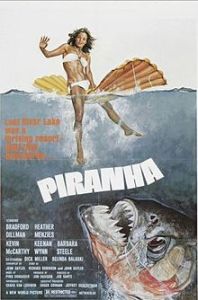
Woman straddling raft with toothy fish approaching

Keeping up with my shark-week themed reviews this summer, it’s time for a look back at “Piranha” (1978), if you dare…

The military-industrial complex hatches a plan to destroy the river systems of North Vietnam toward the end of the war.  The war ends, but the secret program lingers on to juice up piranhas and enable them to survive in fresh or salt water.  Sexy teens trespass into the old test site to go skinny dipping by moonlight.  After they’re eaten alive, an agent from a skip-tracing company (blonde and perky of course) is dispatched to find them.  Working together with an alcoholic single father mountain man, she pulls the plug on the pool to the horror of the man running the program, which drains and releases the piranhas into the river.

The duo dash downstream by raft, by stolen patrol car, and motorboat to warn the adults and save the children.  Of course, nobody believes them in time and a host of fisherman, swimmers, inter-tubers, and pleasure-boaters are turned into fish food.  It’s formulaic but fun.  The piranha backstory is clever as any creature feature.  The pace of the movie is pretty quick.

The good guys are actually well-developed characters.  The agent and the mountain man grow on each and the audience throughout the film.  They seem to be enjoying themselves along the way, which is kind of rare but refreshing for a movie like this.  We’re rooting for two to save his daughter.  Like “Orca” which came out a year earlier, the man is so focused on saving people that he ditches the bottle.

The supporting characters are one dimensional—a mean summer camp manager who refuses to listen to warning and jeopardizes campers in the process, a venal politician hell-bent on a big opening day for the water “arena” he helped develop, and a wicked witch of a scientist (brunette and dowdy of course) who consistently downplays the threat and treats people like dirt.

The movie seems to be low-budget because the piranha effects are crummy.  We never really see the fish, or when we do they look like flounder.  The sound effects, a high-pitched pulsing sound, are more annoying than scary.  Their impact on victims seems to vary in proportion to how good, bad, or inconsequential to the plot they are.  Some people end up nibbled and bloody, others get totally de-fleshed and a tub of ketchup explodes on the river’s surface in a matter of seconds.

No, it’s not as well-done or as good as “Jaws.”  It is corny but it is amusing.  There are some scenes like the skip-tracing agent ripping open her shirt to distract a guard that are worth a look and a chuckle.  Modern-day marketers brand it as a “cult classic” and it lives up to that designation.  Recommended.

Movie review: “Tarzan” swings into action

Standard

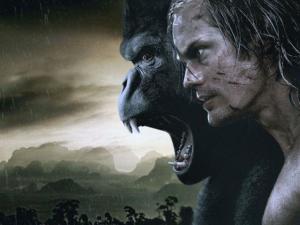
Legend of Tarzan promotional graphic

King Leopold dispatches Leon Rom to the Belgian Congo to exploit the colony by enslaving its locals and stealing the diamonds of Opar.  Chief Mbonga gives Rom the diamonds on the condition that he bring Tarzan back from England to the Congo.

Rom’s unseen hand is at work as Tarzan is misled twice to induce him back to Africa.  First by British business interests who want his presence in the Congo to calm the nerves of investors, then by Samuel L. Jackson’s character, Dr. George Washington Williams, an envoy from America interested in exposing the slave trade and militarization of the Congo.

At first Tarzan refuses.  He’s John Clayton III, Lord of Greystoke, a wealthy and sullenly dignified nobleman.  When a little girl asks him if it’s true that his mother is a gorilla, he pooh-poohs it, even though a gorilla nursed and raised him.  He doesn’t want to go home, but Dr. Williams talks him into it.

Fearing the effect her shirtless husband could have on female audiences, wife Jane insists on travelling with him.  Upon arrival, she is abducted by Rom, a prayer bead fondling creep.  He keeps plucky Jane in check by threatening to kill her native friends.

Abandoning every shred of doubt about going home, Greystoke immediately becomes Tarzan again, and is given a warmer welcome than Ali at the Rumble in the Jungle.  Greystoke reconnects with a friendly tribe, and warriors travel with him and Williams to head off Rom and Mbonga at the pass.  On the way is where most of the vine swinging takes place.  The good guys free slaves and hash out an old family feud within Tarzan’s gorilla family along the way.

The current day’s scenes are intercut with flashbacks to Tarzan’s youth and his first encounter with Jane.  Although the multiple flashbacks would be confusing in any other movie, they make sense here because we already understand Tarzan’s backstory.

Samuel L. Jackson provides comic relief along the way without profanity or silliness.  The story is adventurous but a tad on the serious side, so Jackson’s character is a welcome counterweight.  Alexander Skarsgard, who plays Tarzan, is the straight man making few jokes and smiling only a few times, mostly when among his tribesmen friends.  (That’s is why it’s perplexing that he was so reluctant to leave England.)

The big fight scenes—one during an escape effort by Jane, a two-round grudge match between Tarzan and his super-heavyweight gorilla brother Akut, and a battle against Mbonga, are all exciting.

But to me, the most exhilarating scenes are swinging into action from the treetops.  The Tarzan concept is a precursor mashup of Ewoks and Spiderman, with the freedom to swing around and serve justice under the jungle canopy instead of navigating New York’s skyscrapers.

It’s too bad that there aren’t more scenes in the jungle.  That’s where we normally think of Tarzan living.  In “The Legend of Tarzan” (2016) most of the scenes are someplace else:  England, the port, the village, the railroad, the river, Opar, etc.  On that score, “The Jungle Book” that came out earlier this year outperformed this movie.  (Plus it was fun to see little Mowgli use his wits to outsmart the bad guys, unlike Tarzan who relies more on physical traits.)  Nevertheless, “The Legend of Tarzan” is a thrilling movie to watch on the big screen.

Book review: Orca starts with a bang, ends on ice

Standard

http://smg.photobucket.com/user/panspersons/media/trashisneat/herzogorca.jpg.html

Before there was “Blackfish,” there was “Orca.”

And alongside Orca the book (1977) was Orca the movie.  And a dreadful movie it was.  My main memory is of a whale fetus ejected from its mother’s womb, landing on a ship deck, and squealing like a human baby.  It put the “ick” in flick.  As others have pointed out, the novel is superior.

Jack Campbell, the main character, is an alcoholic who is hopelessly uninterested in anything life has to offer, barely keeping his father’s charter boating business in Florida afloat.  His sister Annie’s boyfriend finds a newspaper article about a $125K reward from the Japanese for the capture of a great white shark.  Campbell’s crew, including surly Gus, head north in the Bumpo.

While hunting fish, Campbell finally finds that the activity excites him.  He begins to step away from the bottle.  Ending up in Canadian waters, the Bumpo fails to capture a shark.  Netting an orca, the killer whale, is more feasible.  Campbell and the Bumpo’s crew gain the blessing from the leaders of a South Harbor, a Newfoundland fishing village, to ship out on a whaling mission.

During the expedition, a pregnant orca delivers a stillborn calf.  The orca father, dubbed “Nickfin” by a local Indian chief, blames Campbell.  That sets into motion a series of attacks against vessels, Campbell’s loved ones, and South Harbor.  The Bumpo is damaged, and Campbell is stuck back in town awaiting repairs while the entire town turns on him.

There he falls in love with Rachel, a whale expert who doesn’t want Campbell to kill the orca.  He doesn’t want to tangle with Nickfin either, since he knows how dangerous the whale is.  But the town becomes so antagonistic that Campbell has little choice but to ready for battle with the orca on the high seas.

Campbell is a strong, engaging character.  The succession of events leading to the final battle is compelling.  The orca’s attack scenes are gripping.  The fickleness of the villagers—cheering on Jack at one point and trying to run him out on a rail later on—is frustrating but true to life.  Overall, I liked the book.  People who like sea monster fiction like Jaws and Meg will find this to be a quick and entertaining read.  The audiobook was fun because of the sly narration by Mark Moseley.  I’d give the novel three out of five stars.

Why not a higher rating?  There’s an odd theme in the book involving Campbell’s bonding or soul connection with Nickfin.  Campbell perceives that the orca represents freedom.  That doesn’t make sense since the whale seems as obsessed with revenge as Campbell does.  At other points, the orca represents Campbell’s own demons—perhaps his alcoholism or sense of worthlessness.  At times the connection borders on the paranormal with Campbell practically reading the whale’s thoughts.  That element didn’t work for me, and the final page or two made for a limp ending.

Movie review: “In the Heart of the Sea”

Standard

Movie poster for In the Heart of the Sea with Chris Hemsworth over a sperm whale's tail

Some people have called “In the Heart of the Sea” (2015) an unofficial “prequel” to Moby Dick.  That’s not the right word.  Prequel makes it sound like it’s a story ending where “Call me Ishmael” begins.  It’s actually a depiction of Herman Melville and the true-life story he researched while writing his great American novel.

I wish “In the Heart of the Sea” had been released 20 years ago before I read Moby Dick.  The book is dense and challenging.  Moby Dick went straight into the lives of the characters then shifted to life on Captain Ahab’s ship.  I don’t remember it stopping to explore the wider economic motivations behind whale hunting.

“In the Heart of the Sea” provides that background and context.   It presents Nantucket as a thriving point of embarkation for the “oil business” (whale oil).  Think of it as J.R. Ewing and the Texas oilmen in “Dallas” transported to Massachusetts in the 1800s.  The nautical ways of the Old World still prevail with the privileged sons of wealthy men can essentially purchase their commissions as officers.  The diffident and inexperienced Pollard is given command of a ship with Chase as first mate even though Chase is God’s gift to whaling.

That’s where we see our first signs of trouble.  Not just for the crew, but for viewers.  Chase is too perfect.  He demonstrates again and again on deck that his knowledge and seamanship is superior to Pollard’s.  He’s bigger and stronger than anybody else aboard.  Chris Hemsworth, who plays Chase, speaks in a husky, artificially deep voice which is often difficult to understand.  It’s like listening to somebody speak through a cheerleader’s bullhorn.  There is volume and strength but the words are indistinct.  Chase’s main failing is depicted as arrogance, which is easy to understand since he is better than everybody else.

However, another of his failings, which probably was unintentional on part of the moviemakers, is that Chase is totally serious and unfunny all of the time.  That entire movie is guilty of that, too.  There are very few laughs and rarely a light moment aboard the Essex.  The story is presented as the most serious thing that has happened to anybody.

The story itself is a good one, and we can see why Melville thought it would make for a great book.  Pollard and Chase are trying to kill as many sperm whales as possible so they can be done with each other and go back home.  Despite warnings they get at port in Chile about an aggressive sperm whale, they pursue the whale.  The giant beast already has an antipathy toward human ships.  The whale eludes capture and retaliates later.  The whale is smart and recognizes the crew wherever they go from that point forward.

Like every other shark, whale, or sea monster story, matters worsen for the Essex’s crew.  The number of humans dwindle on a long a painful voyage home.  Thirty years later, a cabin boy who survived the ordeal reluctantly recounts the tale to Herman Melville, enabling him to finish writing his classic.  The witness’s wife, in a rare moment of comedy, is the only character to agree to accept Melville’s payment for consenting to an interview.

Overall, the revenge story and the man-versus-nature conflict make for gripping drama.  The special effects of the swelling sea and whale are well-done.  The movie has a good pace and doesn’t waste time on irrelevant side stories.  The film illuminates the context of the important period of American history that formed the basis of Melville’s book.  I’d give the movie an 8 or 9 out of 10 for being so well-made, but I ding it a point or so down to a 7 for being self-important and stodgy.

Review of “Zoo” Season 1

Standard

Zoo miniseries airs on Channel 46 in Atlanta

The CBS series “Zoo” is a harmless diversion for recreational TV viewing.  It’s a summer series about a global condition that affects a wide variety of animal species causing them to become aggressive toward humans.  It is loosely based on James Patterson’s book of the same name, which had the same basic premise.

The show also has the same main character as the book, Jackson Oz.  He’s an impetuous but perceptive man played by James Wolk who discovers early signs of the problem among lions in Botswana.  Jackson’s father studied the same phenomenon of interspecies animal aggression, but nobody believed him either.  Wolk is very telegenic and he may be one of the reasons that the show was renewed for a second season which debuts this week on June 28.

In Botswana, Jackson meets Chloe, a Frenchwoman played by Nora Arnezeder.  Unlike the book’s depiction of Chloe as a scientist who becomes a fawning doormat once she falls in love with Jackson, the TV series presents Chloe as a strong, independent woman who investigates the animal behavior for reasons of international security.

The other characters are mostly inventions of the TV show.  Abraham, a Kenyan safari guide played by Nonso Anozie, is “the muscle” of the group.  He also serves as a rational Spock to Jackson’s risk-taking Kirk.  Anozie has a commanding screen presence and makes for fun watching every week.  His stature and authoritative baritone would make him the perfect actor to play Professor Challenger in a modern version of Lost World.

Billy Burke and Kristen Connolly play the other two members of the team.  Burke is Mitch, a veterinary pathologist who serves as the geeky and irascible Jeff Goldblum of the group.  Connolly is Jamie, a crusading journalist cum blogger on a campaign to expose Raiden, a shadowy corporation with questionable products that have found their way into each link of the food chain.  As Jackson and Chloe pair off, so do Mitch and Jamie.

The quintet fights their way through at least one hostile species each week, rarely in the same location twice.  They take cover from swarming bats in the favelas of Rio de Janeiro, dodge man-eating leopards in Zambia and Zimbabwe, and investigate bears on the prowl in Paris.  Their work is sponsored by the intelligence agency that employs Chloe, or so it seems, until the group finds out that Raiden is actually pulling the strings.  The group has to worry about the humans on their tail as much as they have to worry about the animals.

On occasion, the show slips into a pattern of scenes that are dark or serious.  Normally, the focus is on adventure and camaraderie within the team, and that’s where the show is at its best.  On paper the characters are a bit one-dimensional, but the actors do a great job of adding depth and conviction, especially when they probably have to do half of their acting in front of a blue screen.  The special effects are very good for a TV show—the animal attacks don’t seem computer generated.

You can catch up on Season 1 on Netflix and tune into CBS on Tuesday nights at 9 for Season 2.

Book review: dive into MEG for deep-sea thrills

Standard

Cover shows blood at the bottom of the Mariana Trench

Even if you’re not going to the beach, you should read Steve Alten’s first book about a giant shark this summer.  The fifth book of Alten’s series came out just last week, so it’s time to start catching up.

Though MEG is similar to Jaws (giant shark goes on rampage) it is distinct and stands on its own.  The novel is about Carcharodon megalodon, not the great white shark of Jaws fame.  The premise is that extinct megalodons still exist.  They live so deep in the Mariana Trench that nobody knows.  They survive on the warmth of the thermal flows from the earth.  The water above them is too cold for them to swim in, so they are confined to the basement of the sea until an accident happens that unleashes one of them to the surface.  Mayhem ensues.

While the premise may sound far-fetched, each step toward the megalodon’s surfacing is presented in a believable fashion.  Even if somebody pooh-poohs the scientific plausibility of the anatomy and behavior of the meg, the idea of prehistoric mega-sharks among us is an imaginative and exhilarating concept.  The meg is so big that it poses a threat to ships and whale pods.  Its ability to destroy marine life and destabilize entire ecosystems of shallower waters is believable and scary.  This sets up the rationale for extreme measures by humans to stop the meg.

Jonas is the expert in the middle of all the action.  At first nobody believes him.  Then they begin to believe him but don’t see the threat as seriously as he takes it.  Will they catch up to his way of thinking in time?

MEG is fast-paced and somewhat short (my copy has large font and generous spacing but still falls under 300 pages).  The action, like the location of the meg swimming across the Pacific, keeps moving so there’s no threat of getting bored.  MEG is also satisfying because bad things happen to characters who are jerks.

The imaginative premise, high-octane plot, and characters you’ll enjoy rooting for or against earn this book five stars.

Review: Richard III leads sheep to the slaughter

Standard

Recognizing the threat posed by Gloucester early on, Queen Elizabeth says, “I fear our happiness is at the height.”  Ten murders later with Gloucester crowned as Richard III, the former queen, Margaret, laments to his mother, “From forth the kennel of thy womb hath crept a hellhound that doth hunt us all to death.”  Separately, Margaret sums up some of the recent changes in succession during the regicidal War of Roses saying “I had an Edward, till a Richard kill’d him; I had a Henry, till a Richard kill’d him.”  The observations of the women in Richard III are among the keenest and most enjoyable elements of Shakespeare’s play.

The noblemen vacillate between opposing and supporting Richard.  Clarence, his brother and one of his first on-stage victims says, “The great King of kings hath in the table of his law commanded that though shalt do no murder: will you then spurn at his edict, and fulfil a man’s?”

Spurn it he does, deceiving and stabbing his way to the throne.  Richard demonstrates the traits that brought him to power through pointed, unrivaled language.  Ruthlessness:  “Conscience is but a word that cowards use.” Decisiveness:  “Off with his head.”  Self-aggrandizement while belittling others:  “To royalize his [Henry VI’s] blood I spilt my own” and “Small herbs have grace, great weeds do grow apace.”  And speed:  “Delay leads impotent and snail-pac’d beggary.”

Richard’s lethal rise makes the audience scratch its collective head about why more of the characters don’t act sooner to stop him.  But we can ask ourselves the same questions about quiescence in the face of totalitarian regimes in the 20th Century and today.

But eventually Richard’s thirst for blood and paranoia (“my kingdom stands on brittle glass”) alienate even his most ardent toadies.  His denial of an earldom to Buckingham is enough to send him into the growing camp of rebellion.  Eventually the forces of Richard and Richmond, a nobleman descended from both the Lancaster and York families, meet on the battlefield.  Richard is haunted by the ghosts of his victims in dreams the night before the battle, which doesn’t bode well for him.  After being famously unhorsed and killed, Richmond promises, at long last, “We will unite the white rose and the red.”

The parade of Henrys, Edwards, and Richards in English history and Shakespeare’s histories can be challenging to follow.  The troops of uncles with place names and Christian names that don’t always match the character cues doesn’t help much either.  But a willingness to slog through those challenges is necessary to experience the grandeur of the language and to confront our own moral cowardice in the face of evil.

Book review: Fragment delivers ecological fun

Standard

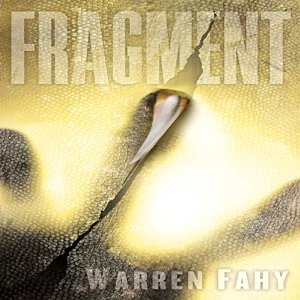
Fragment

A remote, tiny island in the Pacific teems with unique, aggressive species.  But they aren’t dinosaurs from The Land that Time Forgot; they are distant relatives of mantis shrimp that evolved on a separate track from the rest of the earth in Fragment, a 2009 eco-thriller that is more plausible than a living dinosaur book.  The new species are first discovered by the crew of a reality show called “SeaLife.”  The U.S. Navy takes over because of the risk that the dangerous species could leave the island and destroy continental ecosystems, or hostile regimes could exploit the island to develop biological weapons.

Some reviewers have been critical of the “pseudo-science” in Fragment.  But ask yourself, is the science in Mary Shelley’s Frankenstein believable?  How about Arthur Conan Doyle’s Lost World?  Or Michael Crichton’s Congo?  Those books all stretch science as it was understood in the era of the authors to create a compelling story.

Fragment isn’t in the same league as those classic tales of scientific exploration, but it is an exciting, contemporary story.  The setting of the book, “Henders Island,” is an imaginative place.  The best element of the book is the characters’ struggle to survive in the ominous setting.  Thatcher Redmond, the villain of the book, is fun to hate, and his imperious voice was the highlight Robin Atkin Downes’s narration in the audiobook version.

The U.S. government has several possible ways to deal with the threat of the aggressive species on Henders Island.  Without spoiling the ending, I will just say that I was not a fan of the solution.  That is my number one complaint about the book, but it made for good drama.

A book review to kick-off the summer: Jaws

Standard

Variety rates “Jaws” as one of 10 movies that was better than the book.  Several lists on Goodreads also put the book Jaws in the same category, such as “The movie was better than the book” which puts Jaws one notch above The Silence of the Lambs.

So my expectations were low when I finally got a chance to read Peter Benchley’s classic.  Reading it easily blew my expectations out of the water.

Like the movie, Jaws opens with a topless teenager splashing into the waves after dark.  We all know what happens next.  But the true horror grows after the first shark attack as we meet the men pulling the strings in Amity.  They call the shots and have the power to make or break the lives of the locals.  The chief of police comes under their nasty pressures to keep the beaches open.  Amity is totally reliant on a very short vacationer season to sustain itself economically for the year.  Brody caves, but he remains a very sympathetic character because we know he wanted to do the right thing.

The biggest difference between the book and film in terms of the plot is that Brody’s wife cheats on him with Matt Hooper.  One Goodreads reviewer calls the sex “utterly pointless and adds nothing to the story,” but that comment misses the point.  Brody’s wife is from “the city,” and grew up vacationing with her middle class family in Amity.  The rift between “summer people” and the townees is one of the big themes in Jaws.  The shark doesn’t just threaten swimmers, but it threatens the fabric of life in Amity.  Hooper, the shark expert, offers the sophistication and care-free adventure that she misses as an Amity housewife.  The shark forces the characters to reexamine where they are in life.

Benchley depicts the escalating threat of the shark very effectively.  Each attack scene is scary and reveals something additional about the shark’s nature and the severity of the danger.  The text may not have the visceral impact to scare you out of the water the same way that the movie could, and it’s true that Stephen Spielberg made a terrific movie.  But that is hardly Benchley’s fault.  If I had written Jaws, I would have been thrilled for a great director to turn my book into a fantastic film.  And if I were Spielberg I’d count my blessings for the good fortune of starting production with such a great book.